Skip to content





Giving your child their first cell phone is a big step for many parents, filled with both joy and worry. It's not just about being able to call home, but about finding the right balance between giving your child freedom, responsibility and independence – while maintaining your peace of mind as a parent.
Today, many families are experiencing children encountering the digital world much earlier than before. The desire to be able to connect with friends and participate online has become a natural part of childhood, but parents often share the same questions: When is it too early, and how do you protect your child from the constant presence of screens and social media?
With that in mind, the need for new ways of thinking about communication has become clearer. A child-friendly mobile phone allows parents to set boundaries and maintain control over how their child is introduced to technology. It is a middle ground where the child can make calls and send messages, but still be free from the distractions and risks that come with full access to the internet.
In this guide, we take a closer look at what a mobile phone without internet actually is, why interest is growing, and how you as a parent can create a good framework for your child's first phone.
Hvad er en mobil uden internet?
Når forældre begynder at overveje deres barns første telefon, møder de ofte begrebet mobil uden internet. Det dækker over telefoner, der fokuserer på det mest nødvendige som opkald og beskeder og i nogle tilfælde GPS, men uden adgang til sociale medier, spil eller åbne websider.
For mange handler det ikke om at fjerne teknologi helt, men om at skabe balance. Nogle modeller har derfor begrænset adgang, hvor barnet kan bruge enkelte funktioner, men stadig inden for faste rammer. Det giver mulighed for kontakt og ansvar uden de konstante fristelser, der følger med en smartphone.
Fordele ved mobiler med begrænset adgang
- Forældrekontrol via egen app som gør det muligt at styre kontakter og brug direkte fra forældrenes telefon.
- Uden internet i visse tilfælde så barnet kan ringe og sende beskeder, men ikke bruge sociale medier eller app store.
- Enkle funktioner som tydelige ikoner, stor skærm og robust design tilpasset børn.
- Bedre fokus fordi barnet kan deltage i skole og fritid uden unødige digitale forstyrrelser.
Fælles for disse telefoner er, at de giver forældre muligheden for at tilpasse teknologien til det tempo, der passer bedst til deres barns alder og modenhed. Barnet får mere frihed, mens forældrene stadig bevarer overblikket.
Why choose a mobile without internet?
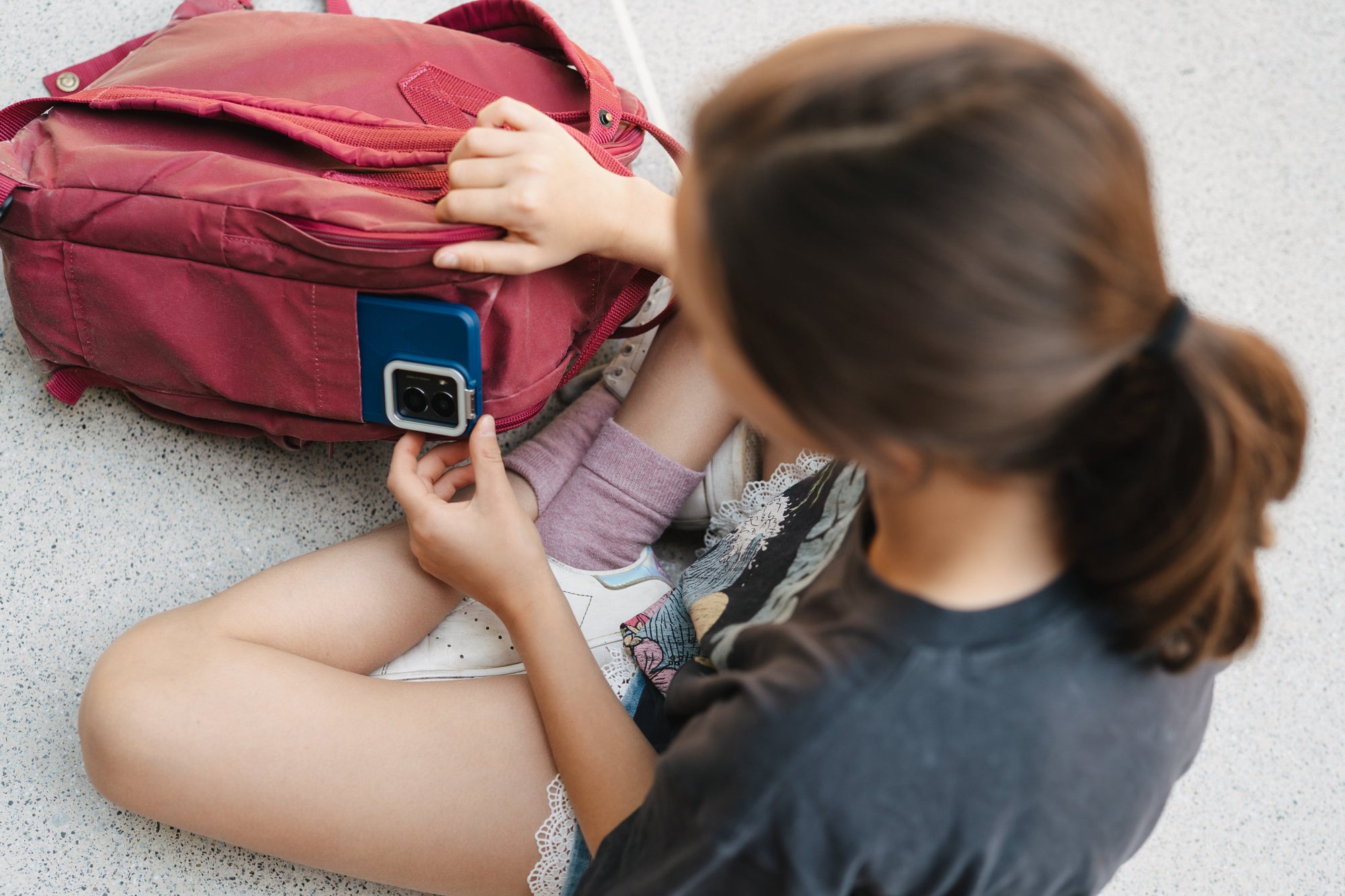
A mobile phone without internet gives the child the opportunity to communicate and learn responsibility in a manageable framework.
The phone becomes a tool for contact and security, without the constant distractions that come with a regular smartphone.
Hvilken mobiltelefon passer til dit barns behov?
When your child gets their first phone, it often marks an important step in the family's everyday life. A child's first phone is often a symbol of more responsibility, freedom and independence, and children are exposed to digitalization on all fronts from an early age.
As parents, you are therefore in a difficult situation. How do we choose the right one? Which features are important, and how can we create security in the child's everyday life without giving access to everything, but only to the features that make sense in a good first phone for children?
By choosing a simple phone with only the necessary features available, your child will learn to use technology wisely. The phone becomes a tool for communication and safety rather than entertainment and distraction. It is a quiet way to introduce responsibility and independence into everyday life.
En dumbphone til børn Telefonen fra 00'erne
En såkaldt feature phone, også kendt som en dumbphone, minder om de klassiske mobiler fra 00’erne. Dumphonen bruges til det, den er skabt til, at ringe og sende beskeder og intet mere. Det gør den til et oplagt valg, når barnet skal have sin første mobiltelefon uden adgang til sociale medier eller åbent internet.
En dumbphone passer godt til børn, der så småt begynder at klare sig selv på vej til skole, legeaftaler eller fritidsaktiviteter. Her er fokus på de simple ting. At kunne give besked, når man er fremme, eller hvis der opstår behov for kontakt. Telefonen har typisk de klassiske funktioner som opkald, SMS og i visse tilfælde GPS, men intet der distraherer. Det er en løsning, der skaber tryghed uden at fylde for meget i barnets hverdag.
Samtidig får barnet en naturlig introduktion til teknologien, hvor formålet med telefonen giver mening fra start. Uden adgang til apps og underholdning bliver telefonen et simpelt redskab til kontakt mellem barnet, familien og de nærmeste venner.

On average, Danish children get their first mobile phone at the age of 8.2, but most parents believe that it should ideally happen around the age of 10.
Source: Population survey conducted by the Wilke research institute for YouSee, May 2025.
En mobil med begrænset adgang - det næste trin for forældre og børn
En mobil med begrænset adgang bygger videre på det, barnet allerede har lært gennem simple enheder som en dumbphone. Den tilbyder de samme grundlæggende funktioner som opkald, beskeder og GPS, men giver lidt mere frihed til at bruge teknologi i hverdagen, stadig inden for trygge rammer. Her handler det ikke længere kun om at kunne kontakte hinanden, men om at lære at bruge en telefon mere ansvarligt og selvstændigt.
Forældre bevarer overblikket gerne gennem indstillinger eller en forældrekontrol via en app. Det giver mulighed for gradvist at give mere ansvar, uden at give slip på kontrollen. Barnet oplever frihed, men stadig med tydelige grænser, der gør det nemt at forstå, hvad teknologien skal bruges til.
Denne type mobil passer godt til børn, der begynder at bruge teknologi som en naturlig del af deres hverdag, til kontakt, læring og bevægelse, men som stadig skal beskyttes mod ubegrænset internet og sociale medier. Den hjælper barnet med at udvikle sunde digitale vaner, hvor kommunikationen står i centrum, og teknologien støtter relationer frem for at forstyrre dem.
What to avoid in a child's first phone
In line with the government's new proposal to restrict access to social media for children under 15, the focus on digital safety has become more important than ever.
As parents, it's not just about choosing which features a mobile phone should have – but also which ones it should avoid. By opting out of features like social media, games and open internet access, you can create a calmer and safer introduction to technology.
Hvad er de vigtigste funktioner i en telefon til børn?
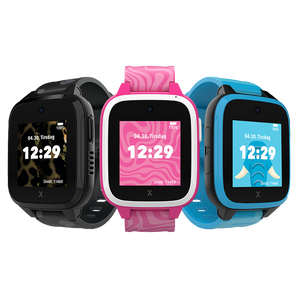
A smartwatch for kids isn't about giving them access to technology, but about creating security and making everyday life easier for both child and parent. The best models are simple to use, free from distractions and focus on the features that add value to everyday life.
When choosing, you should especially look at how the watch supports communication, safety and responsibility. Without compromising your child's freedom and play. Here you get an overview of the 4 most important functions when choosing a smartwatch.
Good features in a phone for kids
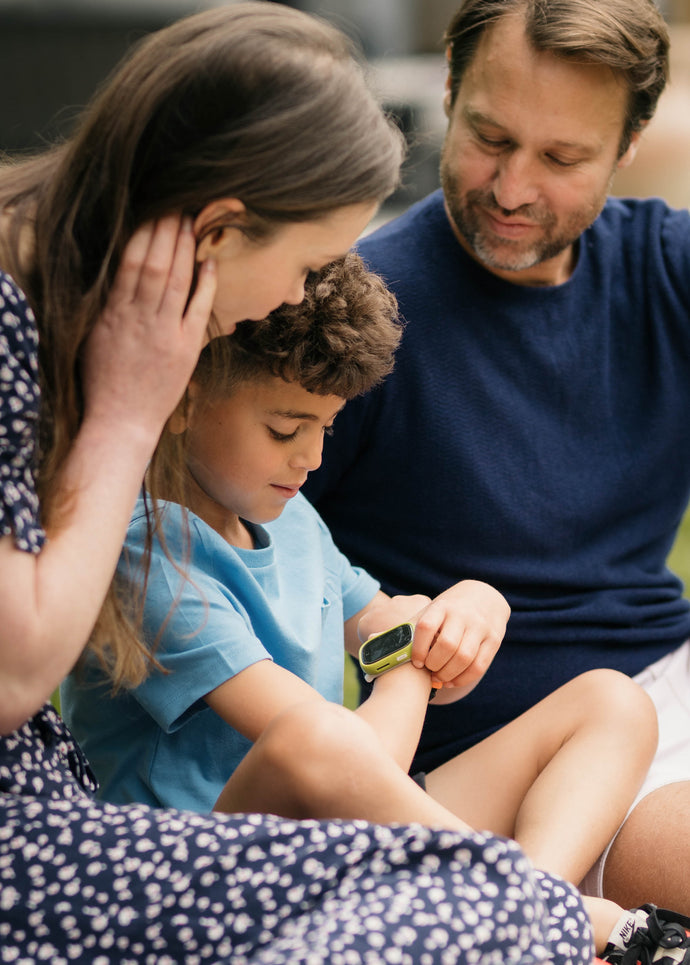
Only approved contacts can send messages and make calls
A phone for children should first and foremost allow for contact in a safe way. Calls and messages to approved contacts give the child the freedom to communicate without opening up social media or unknown numbers.
The child learns that the phone is a tool for keeping in touch with family and friends, not a channel for everything and everyone. At the same time, it gives parents peace of mind because they know that all contacts are approved and handled in a safe environment.

Good features in a phone for kids
Built-in parental controls and restricted access
Parental control is not about monitoring, but about creating peace and overview.
Through an app or simple settings, parents can control who their child can contact, how long the phone can be used, and which features are open. This way, the child can use their phone freely, but still within a framework that feels safe. Over time, the features can be adjusted according to the child's age and maturity. This allows for the gradual introduction of more digital freedoms when the child is ready.
A good phone thus helps both parents and children find the right balance between responsibility and independence.

Good features in a phone
GPS and safety features
The need for GPS naturally depends on the child's age and how independent they are in their daily lives. For some families it is not necessary, while for others it provides extra security when the child starts to walk or cycle on their own.
With GPS and simple security features, parents can monitor whether their child has arrived safely at school, after-school care or with their friends. This provides an overview of everyday life without it feeling like control.
The best solutions allow you to define safe zones where you are automatically notified if the child leaves the area.
For the child, GPS should not feel like surveillance, but as an aid to freedom and safety. It is a tool that supports trust and allows the child to move more independently, while the parents can still have peace of mind.
Good features in a phone for kids
School conditions and respect for learning
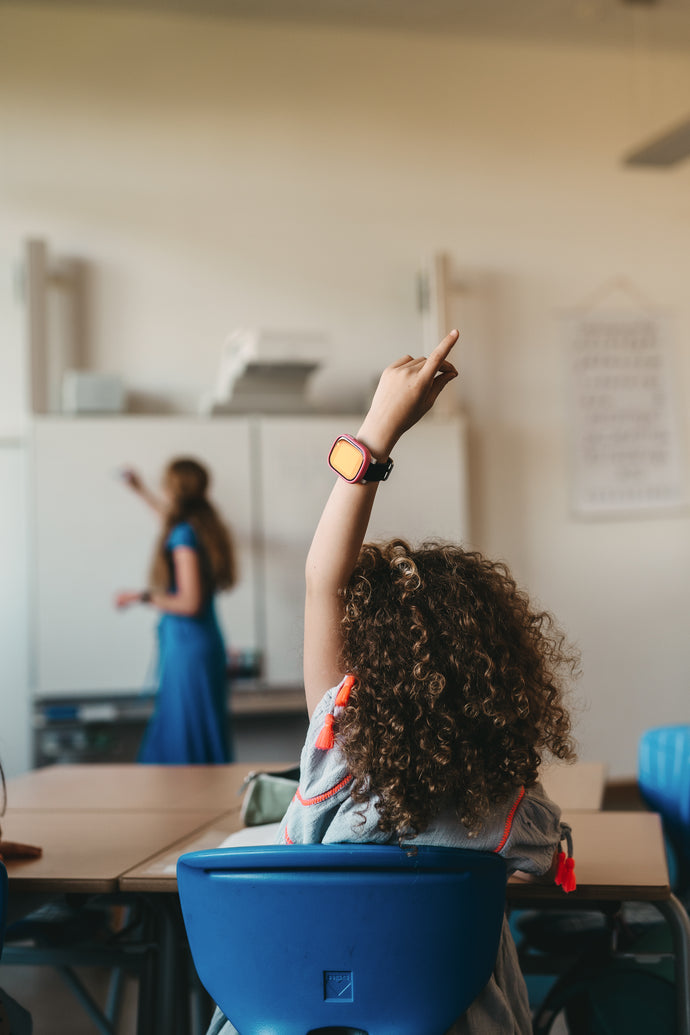
As more schools and after-school programs work towards mobile-free environments, it is becoming clear that technology should support children's everyday lives - not disrupt them. According to the Ministry of Education's new agreement on mobile-free elementary schools, phones should not take the focus away from teaching and community, but should be used with care.
That's why a feature like school mode is an important part of a good children's phone. When activated, calls, messages and notifications are paused so that the child can concentrate during school hours, while parents can still be in touch when the school day is over. It provides peace of mind in everyday life and teaches the child that technology is also about balance and respect for the community.
Frequently asked questions about your child's first mobile phone
Do you have questions about when it's time for the first phone call and what you should pay attention to? Here you will find answers to some of the most common questions among parents.
When should my child get a cell phone?
We recommend that you postpone it as long as possible. There is no definitive answer, because children develop differently. Many parents choose to give the first phone around the age of 8 to 10, when the child begins to move more independently. The most important thing is that the child understands simple rules about responsibility and use before the mobile phone becomes a natural part of everyday life.
You can read our recommendations about when your bar should get mobile here.
What is the difference between a dumbphone and a mobile with limited access?
A dumbphone only has the most basic functions such as calls and SMS, while a mobile with limited access may offer a few more options, such as GPS, camera and parental controls.
Both types are good choices, the difference lies primarily in how much responsibility you are ready to give your child.
Hvilken telefon er bedst til børn?
En starttelefon til børn uden internet og sociale medier er ofte det bedste valg til børn i alderen 8-12 år frem for en smartphone. Den giver mulighed for at ringe og sende beskeder uden unødvendige distraktioner.
Valget afhænger dog altid af barnets modenhed, alder og selvfølgelig familiens behov.
Can my child bring their mobile phone to school?
It depends on the school's own rules. Several schools are introducing mobile-free periods or zones to create more calm in the classroom and strengthen the community. One solution may be to let the child have the phone, but turn it off and agree that it will only be used after school. This helps the child understand that a mobile phone is a tool – not something that should be on hand all the time.
You can also read how to bring a smartwatch to school here.
Is a smartwatch for kids a good choice over a mobile phone?
A smartwatch can be a good first step into the digital world. It gives the child the opportunity for contact and security without access to social media, games or the internet. When families choose a smartwatch for children, it is because it is a more child-friendly alternative to a mobile phone, with functions adapted to the child's age and needs.
What is better: a cell phone or smartwatch for children?
It depends on where your child is in their development and what needs need to be met.
- A mobile phone for children provides a little more freedom, but also more temptations in the form of games and apps.
- A smartwatch, on the other hand, is simpler and focuses on security, contact and a clear framework.
Many families choose a smartwatch as the first step because it allows them to make calls and send messages without access to social media or the internet.
You can see an overview of the best children's smartwatches.

 Danmark
 Norge
Norge
 Sverige
 Suomi
Suomi