Skip to content





Children don't need access to the entire internet. They need security, communication and just the right amount of freedom. That's the difference between a tablet and a smartphone.
There was once an idea that technology should be democratized. Be accessible to everyone, not just the few. Steve Jobs stood on stage and said “think different.” Apple launched the iPhone, and the world changed. Suddenly we had the internet in our pockets. Access to everything, all the time.
But maybe we went a little too far. Maybe we forgot to ask the question: Does everyone really need this access? Do children need free access to the Internet, social media, and unfiltered chat groups?
The numbers speak for themselves
A Nordic study among 4,000 families in Norway, Sweden, Denmark and Finland paints an alarming picture:
• 6 out of 10 children between the ages of 8 and 12 have experienced unpleasant situations online
• Over half have been contacted by strangers
• Nearly 40 percent of kids are worried that they use their phones too much
• 82 percent of children aged 8-12 already have a smartphone
• Among 12-year-olds, the proportion is as high as 95 percent.
And perhaps most worryingly: 9 out of 10 parents believe they are responsible for their children's digital safety, but only 1 in 10 parents feel they are good digital role models.
The digital paradox
We are faced with a paradox. Parents know that smartphones can be problematic for children. They experience that their children become more restless, more distracted, and more anxious. At the same time, they feel pressured to give their children access to the same things that everyone else has.
“Everyone else has a smartphone,” says the child. And the parents give in, not because they think it’s the best thing, but because they’re afraid the child will feel left out.
But what if there is another way?
Startphone
A starter phone is not a smartphone light. It is not a smartphone with parental controls. It is a completely separate category.
A startphone is designed from the ground up for children. A product where every choice is made with the child's best interests in mind.
What a startphone has:
• Ability to call parents and trusted contacts
• SMS and messages to approved contacts
• Secure sharing of photos and messages in closed groups
• GPS tracking so parents know where the child is
• Camera to capture moments
What a startphone does not have:
• Internet access
• Social media
• App store
• YouTube, TikTok and Instagram
• Possibility for strangers to make contact
Technology adapted to the child, not the other way around
Children should not adapt to technology that is made for adults. Technology should be adapted to children.
A smartphone is designed to keep you engaged for as long as possible. That's the business model. The more time you spend on the screen, the more data is collected, the more ads are displayed, and the more money the companies make.
It's not a conspiracy theory. It's a fact. Tech giants have hired some of the world's most talented psychologists and neuroscientists to make their products as engaging as possible. In other words, as addictive as possible.
Children don't have the same defense mechanisms as adults. Their impulse control is not fully developed. Their ability to regulate emotions is still developing. Giving them access to technology designed to bypass these mechanisms is like giving them the keys to a sports car before they have a driver's license.
The difference between access and accessibility
It's not about keeping kids away from technology. It's about giving them the right technology at the right time.
An 8-year-old doesn't need access to the entire internet. But they need to be able to call their parents on the way home from school. They need to be able to send a message to their grandparents. They want to share a picture of the snowman they built.
A 10-year-old doesn't need TikTok. They need to be part of the social scene without being exposed to the darkness found in the comment sections.
That's the difference between access and accessibility. A startphone gives kids access to what they need without making everything accessible.
Gradual introduction, not an abrupt change
Xplora's philosophy is based on a gradual introduction to technology:
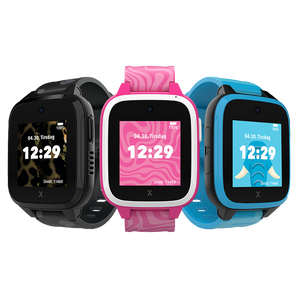
5-8 years: Smartwatch
Children this age need to be able to contact their parents. They need to be able to call if something happens. But they don't need a screen in their pocket that distracts them from playing and learning.
9-12 years: Startphone
The world is getting a little bigger. Children are starting to move more independently. They need more communication options, but still within a safe framework. A startphone provides freedom with clear boundaries.
13+ years: Smartphone with parental controls
As children become teenagers, they are ready for more responsibility, still with parental support. This is where a gradual and controlled introduction to the internet can begin.
Choose the right technology, at the right time
The question is not whether children should have technology. The question is what technology they should have and when.
A starter phone gives children exactly what they need: the ability to communicate, the security to explore, and freedom within a safe framework.
No feed. No scrolling. No distraction.
Just technology that helps kids be kids a little longer.
That's the difference between a starter phone and a smartphone.


 Danmark
 Norge
Norge
 Sverige
 Suomi
Suomi