Skip to content





To create the best environment for all generations, we need to reduce the overall screen time for children.
Excessive screen time can lead to disconnection from both the environment and emotions. This not only affects children's well-being, but also their social development and ability to be present in the moment. Therefore, it is important to support children in finding a healthy balance, combining screen time with creative activities, movement and family presence.
As parents, we have a special responsibility to lead the way. Children learn through our behavior, and when we manage screen time thoughtfully, we show them the importance of variety and active breaks from screens. In this way, screen time for children becomes a natural part of everyday life, with room for both technology and shared experiences.
To help, small changes can make a big difference. Create screen-free zones, find shared activities, and use tools to manage screen time. When we prioritize being together, we increase well-being – not just for the kids, but for the whole family.
Read more about Xplora smartwatches

Screen time for children – how to find the balance
Too much screen time for children can affect both their well-being and how we as a family are present for each other. When we actively limit screen time, we create space for more movement, creativity, and shared experiences. A healthy balance helps children be present in the moment and strengthens relationships at home.
10 tips on how to reduce screen time for children:
Do you want to get started reducing screen time for children and create a healthier everyday life with space for play and presence? We have collected 10 good tips below.
-
Create awareness: Start by getting an overview of how much time the family spends in front of screens and set goals to reduce screen time.
-
Set boundaries: Make firm rules about when and how long screens can be used. Involve the children and find solutions together.
-
Have fun together: Spend time on screen-free activities that strengthen community, such as walks, games or creative projects.
-
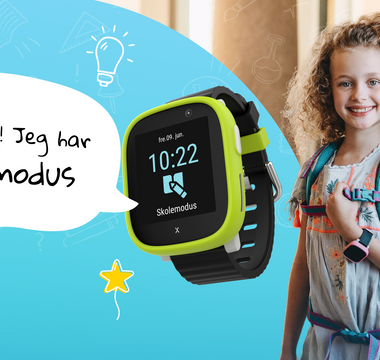
Establish screen-free zones: Provide areas in your home that are free of screens – such as the dining table and bedroom – to create peace and quiet. NOTE: Xplora smartwatches can turn off distractions during school hours with School Mode.
-
Find a balance: Screen time doesn't have to be eliminated completely, but focus on mixing it with physical activity and social contact.
-
Seek alternatives: Encourage hobbies and interests that don't require screens, like sports, games, and crafts.
-
Use technology wisely: Install tools and apps that help limit screen time for children.
-
Create distance from screens: Put devices away when not in use, making it easier to take breaks from the screen.
-
Focus on quality: Something meaningful that contributes positively to learning and development rather than passive consumption.
-
Be patient: New habits take time. Be realistic and acknowledge small progress along the way.
Why is screen time important to take responsibility for?
Screen time is increasingly taking up space in everyday life – for both children and adults. Overuse can create distance from our own emotions, affect social relationships and reduce the time we spend on physical activity. For children in particular, it is important to combine screen time with meaningful breaks and play, so that they have the opportunity to develop both mentally and physically.
The recommended screen time for children and adolescents is clearly defined by the Danish Health Authority.
Too much screen time can affect children's well-being, sleep and concentration, especially if it replaces physical activity and social relationships.
Here are the Danish Health Authority's recommendations for screen time for children:
0–2 years: Screen time is not recommended. If screen time is used, it should be done with an adult and as an active, shared experience.
2–4 years: Maximum 1 hour per day. Content should be age-appropriate and preferably promote learning and movement.
5–17 years: No more than 1–2 hours of screen time per day – depending on the child’s age and maturity. Screen use should be balanced with sleep, physical activity and socializing without screens.
As adults, we lead the way. When we create good screen habits and prioritize time together, we give children the best opportunity to learn healthy digital habits and have a controlled relationship with screen time.
It takes time to change screen habits
Changing our screen habits can be challenging, and especially when trying to reduce screen time for children, it takes patience and persistence. Relapses are completely normal, and the most important thing is to focus on progress – even the small ones. By prioritizing our values and remembering why we want less screen time, it becomes easier to stick with it and stay motivated.
Self-care plays an important role in the process. Allow time for breaks, acknowledge progress, and seek support when needed. Parents' efforts to create a foundation for screen time not only help children, but also strengthen the community at home.
Create closeness and security at home
When we reduce screen time and prioritize time together, space is created for more family togetherness. It’s about more than just being physically present – it’s about creating emotional connection. Through shared meals, activities and open dialogue, relationships are strengthened and children experience security and understanding.
As parents, we show the way for healthy habits, and when we strengthen togetherness and limit screen time, children learn to balance digital habits with play, movement, and social experiences.
At Xplora, we want to support families in finding this right structure. Xplora smartwatches do not help directly, but they open up the opportunity to take the initiative and make screen time meaningful and make room for more activity, so that screen time for children does not take up too much, but becomes a healthy part of an active everyday life. We do this, among other things, with our dedicated activity platform , which focuses on activating children and rewarding them for taking responsibility for an active everyday life. Become part of the Xplora family today.
Choose technology that is child-friendly
When children are faced with their first mobile phone, it's not about the latest technology, but about choosing something that suits their age and maturity. For many families, this means a solution with limited access to social media, apps and the internet , so that the child can call and text without being drawn into endless feeds and notifications.
A simple and safe start can therefore be a children's smartwatch or mobile phone without internet and social media , where the functions are targeted at children's needs - and where parental controls provide the necessary peace of mind in everyday life.

 Danmark
 Norge
Norge
 Sverige
 Suomi
Suomi